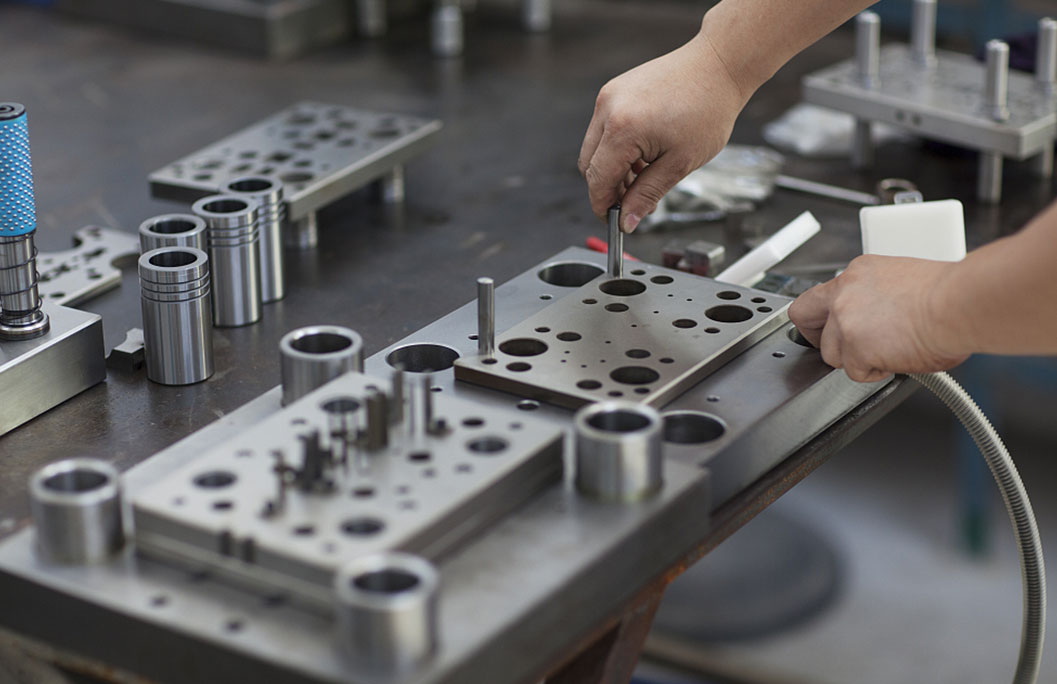
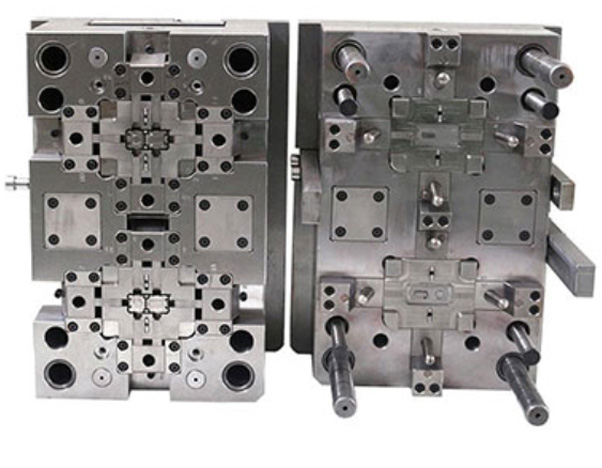
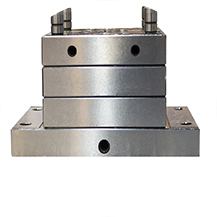
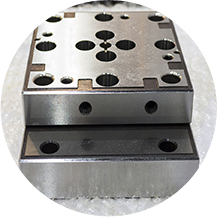
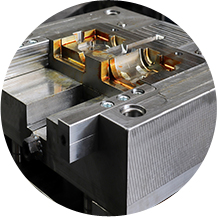
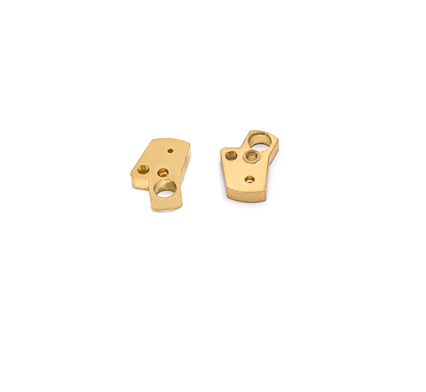
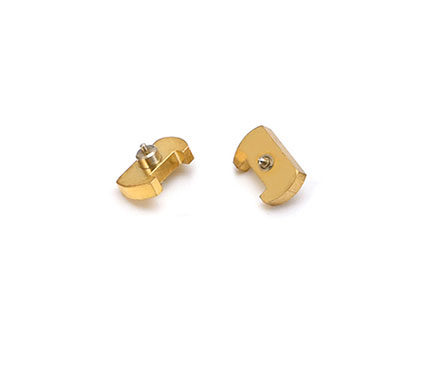
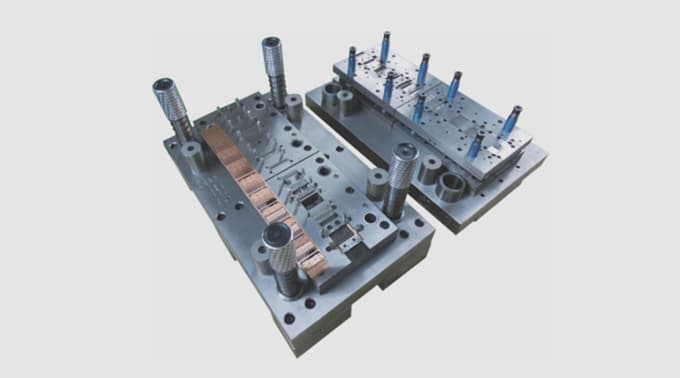
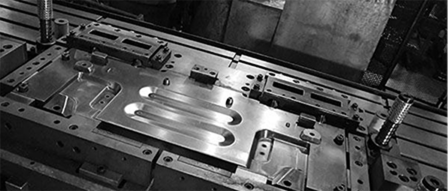
A single die can be divided into punching die, bending die, drawing die, plunging die, and integral die. Single die structure is simple with low cost, short processing cycle, easy to adjust. It is suitable for the simple structure product with small order amounts.
Rapid Tooling: Single dies in 2-4 weeks vs. 6-8 weeks for complex progressive dies
Cost-Effective: Tooling costs 40-60% lower than multi-stage progressive tooling
Flexibility: Easy to modify and maintain for design changes
Ideal Applications: Prototypes, low-volume production (100-50,000 pieces), simple geometries
Material Expertise: Carbon tool steel, D2, A2, and custom material selection
Technical Comparison for Informed Decision Making
| Feature | Single Stage Die | Compound Die | Progressive Die |
| Operations per Stroke | 1 operation | 2-3 operations in same station | Multiple operations across stations |
| Tooling Cost | Lowest ($1,000 - $5,000) | Moderate ($3,000 - $10,000) | Highest ($10,000 - $50,000+) |
| Production Speed | Slow to moderate | Moderate | High (automatic feeding) |
| Setup & Changeover | Simple & quick | Moderate | Complex & time-consuming |
| Part Complexity | Simple geometries | Moderate complexity | High complexity |
| Ideal Volume Range | 100 - 10,000 pcs | 1,000 - 50,000 pcs | 50,000+ pcs |
| Accuracy | Good (±0.1mm) | Good to Very Good (±0.05mm) | Excellent (±0.02mm) |
| Best For | Prototypes, simple parts | Medium complexity, medium volume | Complex parts, high volume |
Simple speaking, a single die refers to taking out the material and then repeating the operation.
And a progressive die stroke can punch out a finished product, which means putting several processes integrated into a mold, progressive die is mechanical automatic feeding and continuous stamping.
Single die structure is simple, easy to manufacture. To those metal stamping parts that need high accuracy and blanking quality requirements, manufacturing precision and service life of the single die become bottlenecks to affect the yield and quality.
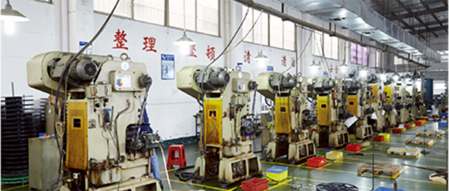
In our production practice, Orienson has rich experience in reducing tooling costs, shortening the mold production cycle, and improving the production efficiency of stamping parts. We can help customers solve these bottlenecks.
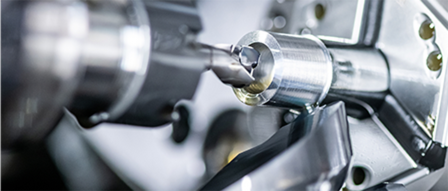
The materials of stamping die are steel, hard alloy, steel bonded carbide, zinc base alloy, low melting point alloy, aluminum bronze, high polymer materials, and so on. Most of the materials used to manufacture stamping die are mainly steel. The common types of working parts materials of mold are carbon tool steel, low alloy tool steel, high carbon high chromium or medium chromium tool steel, carbon alloy steel, high-speed steel, matrix steel and hard alloy, steel-bonded hard alloy, and so on.