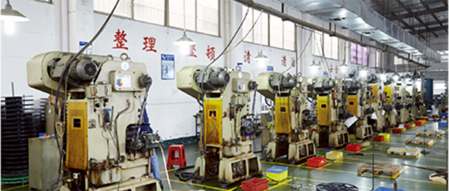
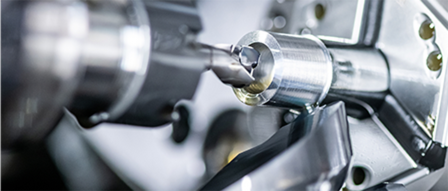
Choosing the right grade is one of the most important decisions in stainless steel stamping. Grades 301, 304, 316 and 321 are all austenitic stainless steels, but differences in composition and mechanical behavior affect forming, springback, corrosion resistance, tool wear and final part performance.
The best material is therefore not simply the grade with the highest corrosion resistance. A spring component may benefit from 301's work-hardening behavior, while a marine component may justify 316 and a high-temperature assembly may require 321. Material selection should start with the function of the stamped part.
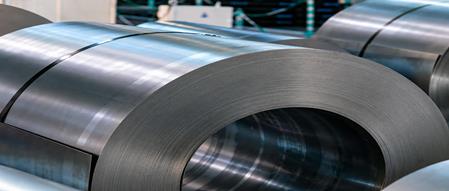
Why Stainless Steel Grade Matters in Metal Stamping
Stainless steel grade matters because chemistry, strength, ductility and work-hardening behavior directly affect how the sheet responds to blanking, bending and forming.
In stainless steel metal stamping, material behavior determines punch force, die clearance, forming sequence and springback compensation. Selecting a grade that is stronger than necessary may increase tooling load and cost without providing meaningful performance benefits.
Corrosion environment matters too. A component used inside consumer electronics does not face the same exposure as a marine bracket or chemical-processing part.
Orienson's stainless steel stamping capability covers materials including SUS301, SUS304 and SUS316 across sheet thicknesses published from approximately 0.05 to 2 mm, illustrating why material grade and thickness need to be considered together when planning the process.
301 vs 304 vs 316 vs 321 Stainless Steel: Key Differences
The main differences between 301, 304, 316 and 321 are formability, work-hardening rate, corrosion resistance and performance in demanding environments.
| Grade | Stamping Characteristic | Main Strength | Typical Applications |
| 301 | High work hardening | High strength after forming | Springs, clips, terminals |
| 304 | Good general formability | Balanced corrosion resistance | Electronics, appliances, brackets |
| 316 | More demanding to form | Strong corrosion resistance | Marine, medical, chemical |
| 321 | Similar austenitic forming behavior | Better high-temperature stability | Exhaust, thermal assemblies |
301 is attractive where the stamped part needs spring properties or increased strength after deformation. 304 is the general-purpose option because it balances corrosion resistance, availability and formability.
316 contains molybdenum, improving resistance in chloride-rich environments, but its material and processing cost is typically higher. 321 contains titanium stabilization and is usually chosen when elevated-temperature service is more important than maximum ease of stamping.
The grade should therefore follow the application instead of using 304 automatically for every stainless steel stamping project.
Is 304 Stainless Steel Good for Stamping?
304 stainless steel is well suited to many stamping applications because it combines useful ductility, corrosion resistance and availability, but work hardening and springback still need to be controlled.
304 is widely used for brackets, housings, electrical components and other precision parts. It can support blanking, bending and moderate drawing, but repeated deformation increases material hardness.
When stamping 304 stainless steel, die clearance, lubrication, tool material and forming sequence become important because stainless steel creates greater tool wear and springback than many low-carbon steels.
Orienson also publishes real 304 stamped-part examples at 0.12 mm, 0.3 mm and 1.0 mm thickness, showing how the same alloy can be used across very different precision components.
304 is therefore a strong default option, but it should not replace proper material selection.
How Formability, Work Hardening and Springback Affect Stainless Steel Stamping
Formability, work hardening and springback determine whether stamping on stainless steel can achieve the required shape and tolerance without cracking or dimensional instability.
Austenitic stainless steels harden as they deform. This can improve final strength but also increases forming force as the operation progresses.
Springback occurs when the metal partially returns toward its original shape after forming pressure is released. Stainless steel's relatively high strength makes this particularly important in precision bends.
Orienson identifies springback, heat-treatment deformation and increased die wear among important considerations when designing stainless steel stamped components.
Tooling engineers may compensate through bend angles, forming sequence, die geometry and appropriate material condition. These factors should be considered during DFM rather than corrected only after trial stamping.
Which Stainless Steel Grade Is Best for Different Applications?
The best stainless steel grade depends on whether the application prioritizes spring performance, general corrosion resistance, harsh-environment durability or elevated-temperature service.
A practical starting point is:
301: springs, clips, contacts and components where work hardening and elasticity are useful.
304: electronics, household appliances, structural brackets and general-purpose stamped components.
316: medical, marine and chemical-service parts exposed to stronger corrosion conditions.
321: components used where elevated temperatures or thermal cycling influence material selection.
For stainless steel stamped parts, higher alloy content should only be specified when the working environment requires it. Using 316 where 304 already meets corrosion and mechanical requirements can increase raw-material and tooling costs unnecessarily.
How to Specify Stainless Steel Stamping Parts for Manufacturing
A complete stamping specification should define material grade, temper, thickness, tolerances, surface requirements and expected annual volume.
Buyers should provide the exact grade and material condition rather than simply writing “stainless steel” on the drawing. Half-hard 301 behaves differently from annealed 301, just as different 304 conditions can affect bending and springback.
For custom stainless steel stamping parts, the supplier should also know critical dimensions, burr limitations, cosmetic surfaces and secondary processes such as passivation, plating or heat treatment.
Orienson lists post-processing capabilities including passivation, electroplating, heat treatment, grinding and surface finishing, so these requirements can be considered together with the stamping process.
How to Choose a Stainless Steel Stamping Supplier for Your Project
A suitable stainless steel stamping supplier should understand material behavior as well as tooling, tolerance control and secondary processing.
Evaluate DFM capability, die design experience, material knowledge, inspection capability, production capacity and tool maintenance support.
A supplier that only quotes from the drawing may miss opportunities to reduce cracking, springback or unnecessary tooling complexity. For international buyers evaluating china stainless steel stamping, integrated tooling and production capability can also reduce communication between separate die makers and stamping factories.
Orienson reports experience across automotive, electronics, medical, energy and communication components, giving its engineering team exposure to different stainless steel performance requirements.
Conclusion: Choose the Stainless Steel Grade Around the Application
The right material for metal stamping for stainless steel depends on the balance between formability, strength, corrosion environment and cost.
301 is useful for spring-like components, 304 offers strong general-purpose performance, 316 suits harsher corrosion environments, and 321 becomes relevant where elevated-temperature stability matters.
Successful stainless steel stamping therefore starts with the application first, then adjusts grade, temper, tooling and forming sequence around the required part performance.
FAQ About Stainless Steel Stamping
Is 301 stainless steel easier to stamp than 304?
It depends on material condition. 301 work-hardens rapidly, which is useful for spring parts but can increase forming difficulty.
Is 304 stainless steel good for deep drawing?
Yes, suitable 304 conditions are widely used for drawing, although tooling and lubrication must account for work hardening.
Why does stainless steel spring back after stamping?
Its relatively high strength and elastic recovery cause the material to partially return after forming force is removed.
Why does stainless steel crack during stamping?
Excessive deformation, unsuitable material condition, poor die geometry or insufficient forming stages can contribute to cracking.
When should 316 be selected instead of 304?
316 is usually considered where stronger resistance to chlorides or aggressive environments is required.
What information should I provide for a stainless steel stamping quote?
Provide grade, temper, thickness, drawings, tolerances, surface requirements, annual volume and secondary-processing needs.

 English